

Best Heart Care Treatment
Why Survival Is Only the First Goal
A heart attack is not a moment.
It’s a process.
What happens in the first few hours matters — but what happens after survival determines whether a patient truly recovers or lives in fear of the next one.
So when people search for the best treatment for a heart attack, they are really asking two questions:
- How do I survive this?
- How do I protect my heart for the rest of my life?
The second question is where most conversations end too early.
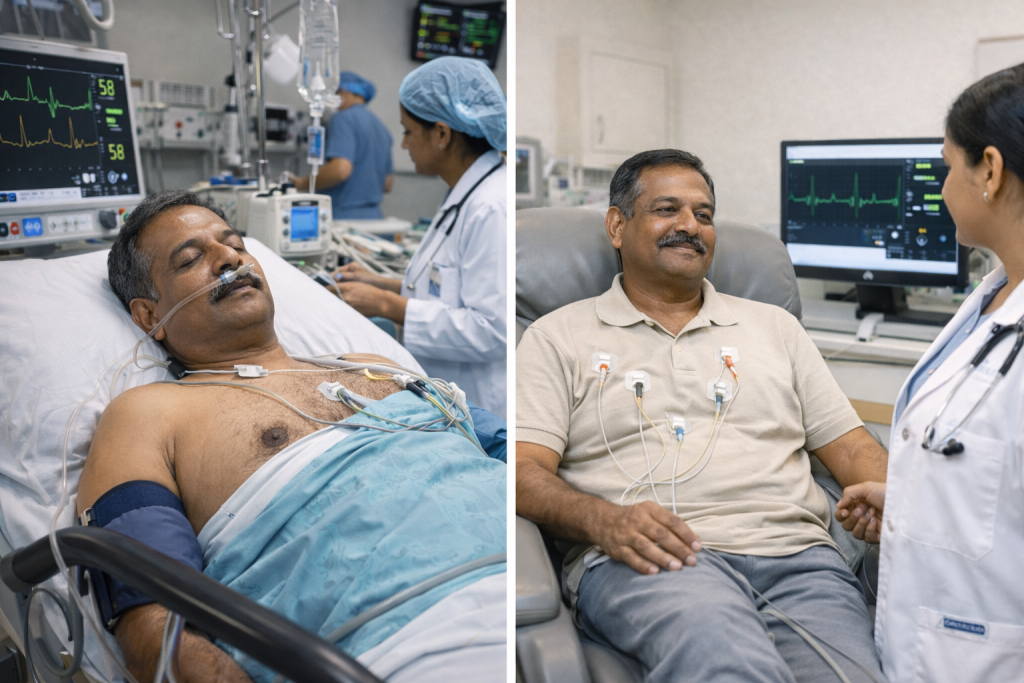
Emergency Care Saves Lives — But It Doesn’t Finish the Job
Immediate heart attack treatment focuses on:
- Restoring blood flow
- Limiting heart muscle damage
- Stabilising the patient
This phase is critical and time-sensitive. But once the crisis passes, a new risk emerges: recurrent attacks, heart failure, and declining quality of life — especially if underlying circulation problems are left unresolved.
The Real Goal: Preserving Heart Muscle
The best treatment for heart attack isn’t just about opening an artery.
It’s about saving heart muscle and restoring function.
The heart muscle, once damaged, cannot regenerate fully. That’s why post-attack care must focus on:
- Improving oxygen delivery
- Enhancing blood circulation
- Reducing the workload on the heart
- Preventing further blockages
This is where many patients lose momentum — treatment stops when surgery ends.
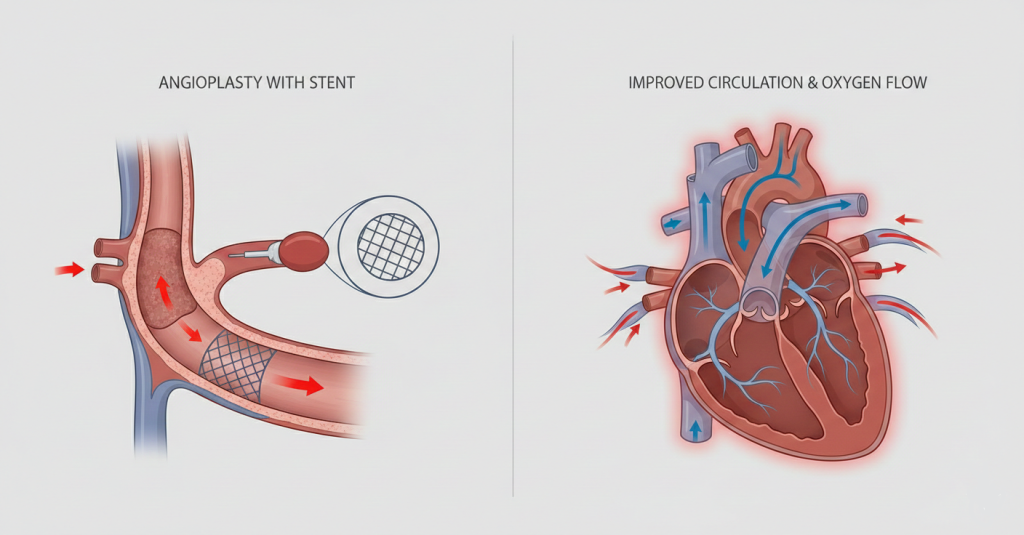
Beyond Stents and Surgery: The Next Phase of Care
Not every patient requires aggressive intervention after a heart attack. And not every problem is solved by it.
At Gunam Cardio Care, post-heart attack treatment planning considers:
- How well the heart is pumping
- Whether symptoms persist despite intervention
- The patient’s ability to tolerate surgery or procedures
- Long-term risk reduction strategies
For selected patients, non-invasive therapies can play a powerful role in recovery and prevention.
Why Non-Invasive Cardiac Therapy Matters After a Heart Attack
Post-heart attack hearts need support, not stress.
Non-invasive therapies can:
- Improve blood flow to damaged areas
- Encourage formation of natural bypass vessels.
- Reduce chest pain and breathlessness.
- Improve exercise capacity
- Lower dependency on repeated procedures
These treatments are especially valuable for:
- Elderly patients
- Diabetics
- Patients with residual symptoms after angioplasty
- Those seeking to avoid further invasive procedures
Heart Attack Treatment Is Not One-Size-Fits-All
Two patients can have the same diagnosis and need completely different strategies.
The best treatment plan is based on:
- Individual heart function
- Risk factors like diabetes and hypertension
- Lifestyle and activity level
- Recovery potential
Gunam Cardio Care focuses on precision-based recovery, not protocol-based repetition.
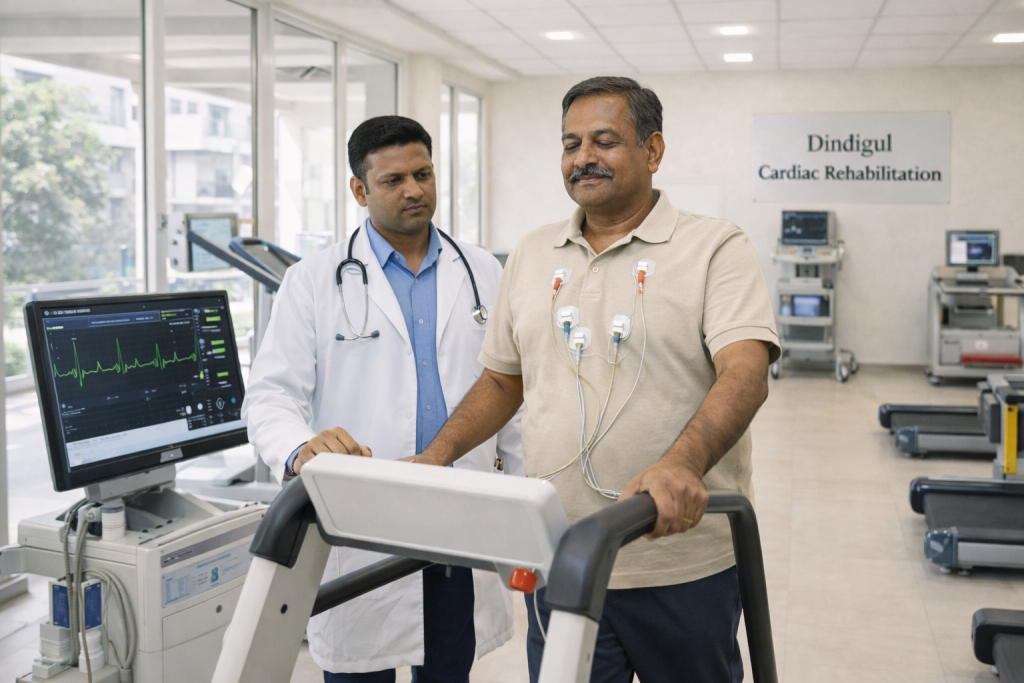
Rehabilitation Is Treatment — Not an Afterthought
True heart attack care includes:
- Ongoing cardiac monitoring
- Lifestyle guidance that is realistic, not extreme
- Stress management
- Regular reassessment of heart function
This phase prevents relapse and restores confidence — something medicine often overlooks.
The Question Every Patient Should Ask After a Heart Attack
Not “What procedure do I need next?”
But:
- Is my heart getting enough blood now?
- Is my treatment improving function or just preventing a crisis?
- Am I being monitored long-term, or discharged too early?
The best treatment answers all three.
Final Thought
The best treatment for heart attack doesn’t end when the pain stops.
It continues until:
- The heart is stable
- Symptoms are controlled
- The risk of recurrence is reduced.
- Life feels normal again.
Because surviving a heart attack is not the victory.
Living well after it is.


