

Angioplasty Alternatives (EECP)
When Opening an Artery Isn’t the Same as Healing the Heart
Angioplasty is often presented as a straightforward solution:
Find the blockage, open the artery, insert a stent, problem solved.
But the heart doesn’t work in straight lines.
And for many patients, angioplasty answers one question while creating several new ones.That’s why so many people now search for an alternative for angioplasty — not to avoid treatment, but to choose it more wisely.
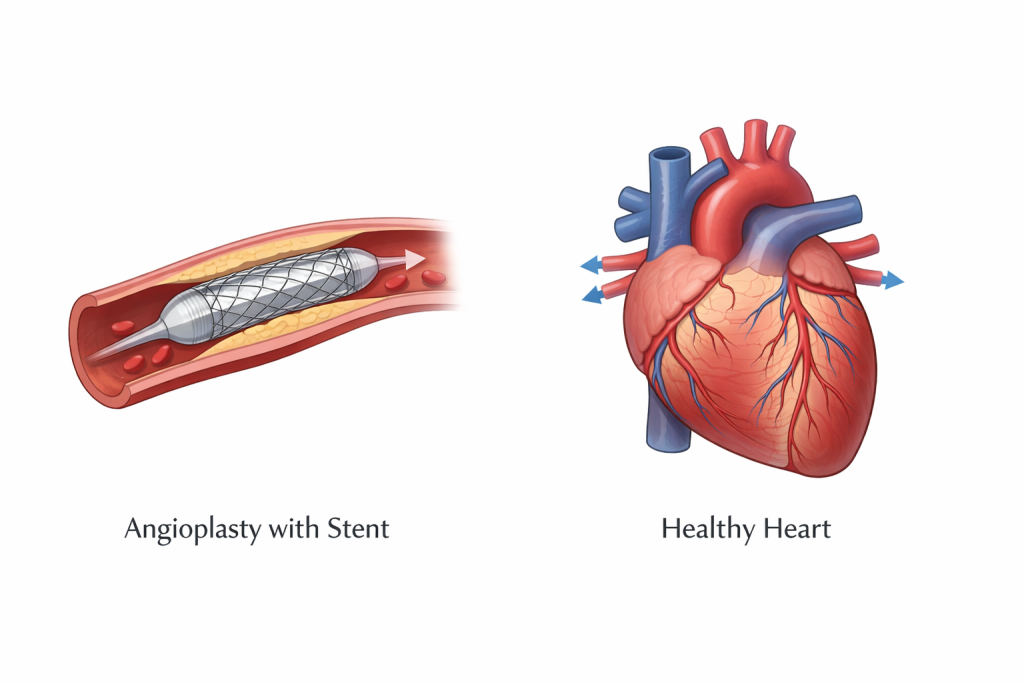
What Angioplasty Does — and What It Doesn’t
Angioplasty is effective for restoring blood flow in specific situations, especially during acute heart attacks.
However, it’s important to understand its limitations:
- It treats a localized blockage, not overall circulation
- It does not reverse the disease process.
- It does not prevent new blockages from forming.g
- Some patients continue to experience chest pain even after the procedure.e
For chronic heart disease, this distinction matters.
Why Some Patients Continue to Have Symptoms After Angioplasty
Many patients assume that persistent chest pain means the angioplasty “failed.”
Often, that’s not the case.
Symptoms can continue because:
- Microvascular disease is present
- Overall circulation remains inadequate.
- The heart muscle has adapted poorly to the previous low blood flow.
- Diabetes-related vessel damage persists.
Opening one artery does not always solve a systemic circulation problem.
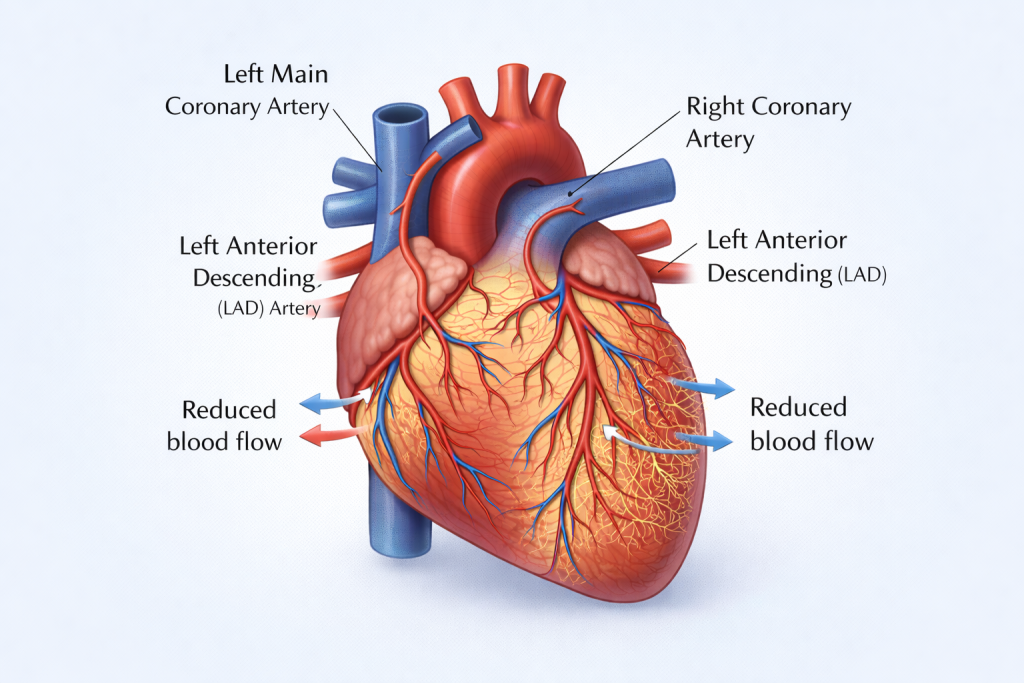
The Shift Toward Functional Heart Treatment
Modern cardiology is evolving from anatomy-focused care to function-focused care.
Instead of asking:
“Is the artery open?”
The better question is:
“Is the heart getting the circulation it needs to function properly?”
This shift is where non-invasive alternatives to angioplasty become relevant.
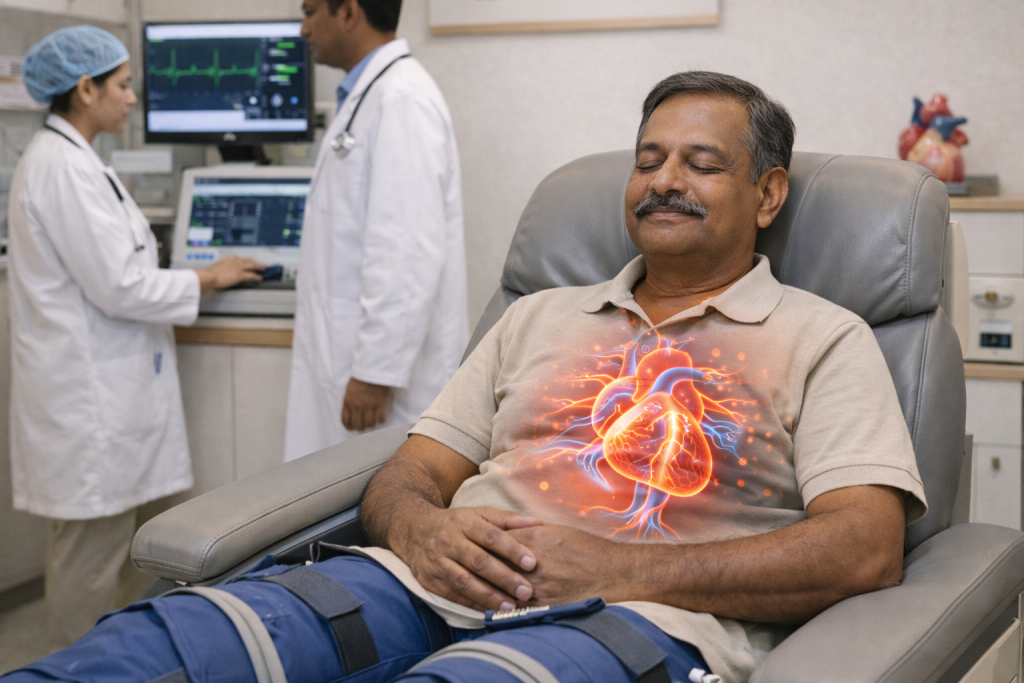
How Non-Invasive Therapy Works as an Angioplasty Alternative
At Gunam Cardio Care, selected patients are evaluated for advanced non-invasive cardiac therapies that aim to:
- Improve overall blood circulation
- Stimulate the development of natural bypass vessels.
- Enhance oxygen delivery to the heart tissue.
- Reduce chest pain and fatigue.
- Improve exercise tolerance
These therapies work with the body’s physiology rather than forcing mechanical solutions.
Who Can Consider an Alternative for Angioplasty?
Not every patient is a candidate — and that honesty is critical.
Alternatives may be appropriate for patients who:
- Have stable coronary artery disease
- Are advised angioplasty, but have manageable symptoms
- Are high-risk surgical candidates
- Have persistent symptoms after angioplasty
- Want to avoid repeated stent procedures.
Each case requires careful cardiac evaluation — not assumptions.
Why Diabetics Should Think Twice Before Rushing Into Angioplasty
Diabetes accelerates arterial disease and increases the risk of:
- Re-narrowing of stented arteries
- Multi-vessel disease
- Poor long-term outcomes with repeated interventions
For diabetic patients, improving global circulation may be more beneficial than opening a single blockage.
This makes non-invasive strategies particularly relevant.
Better Treatment Is About Better Questions
Instead of asking:
“Can this artery be opened?”
Patients should ask:
- Will this improve my symptoms long-term?
- Does this reduce my future risk?
- Are there safer options for my condition?
At Gunam Cardio Care, treatment decisions begin with these questions — not with a procedure checklist
Final Thought
Angioplasty saves lives — no argument there.
But it is not a universal solution.
For the right patient, at the right stage of disease, a well-chosen alternative can improve heart function, reduce symptoms, and preserve quality of life — without invasive intervention.Because the goal isn’t just to open arteries.
It’s to restore the heart’s ability to live well.


