Can EECP Improve Blood Flow to the Heart? What Current Evidence Suggests
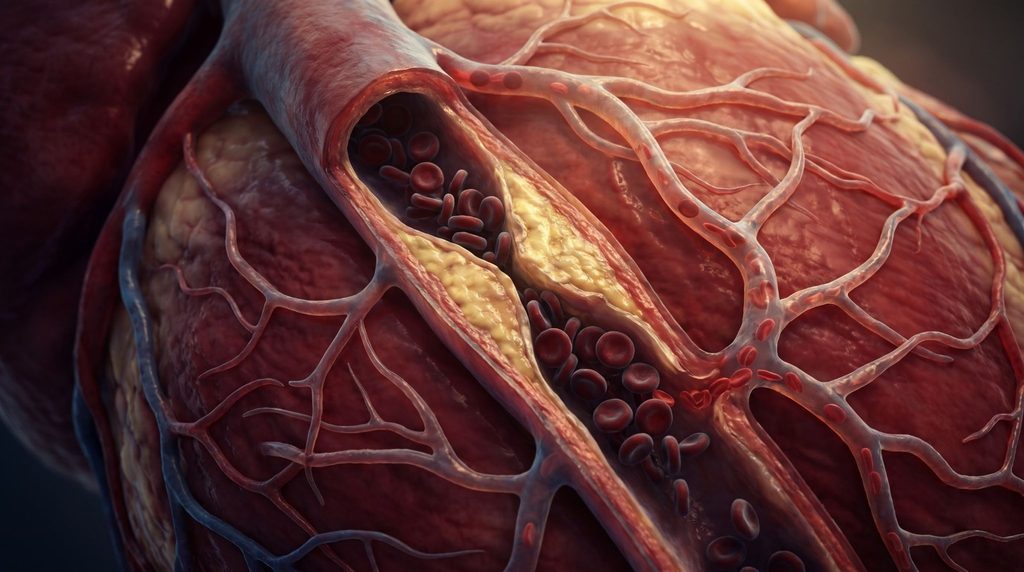
When coronary arteries become narrowed due to plaque buildup, the heart muscle receives less oxygen-rich blood. This reduced blood flow can lead to chest pain (angina), fatigue, shortness of breath, and difficulty performing everyday activities. While medications, angioplasty, and bypass surgery remain the cornerstone of coronary artery disease treatment, not every patient is a suitable candidate for invasive procedures, and some continue to experience symptoms despite receiving standard care.
This is where Enhanced External Counter Pulsation (EECP) has emerged as an evidence-based, non-invasive treatment for selected patients. It has been studied extensively over the past two decades for its ability to improve circulation, reduce angina symptoms, and enhance quality of life.
So, Can EECP Improve Blood Flow to the Heart? What Current Evidence Suggests is a question worth exploring through science rather than marketing claims. Current research indicates that EECP can improve blood flow and symptom control in carefully selected patients with chronic stable coronary artery disease. However, it is not a replacement for emergency cardiac treatments or a cure for blocked arteries.
What Is EECP?
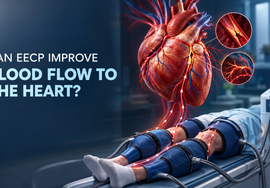
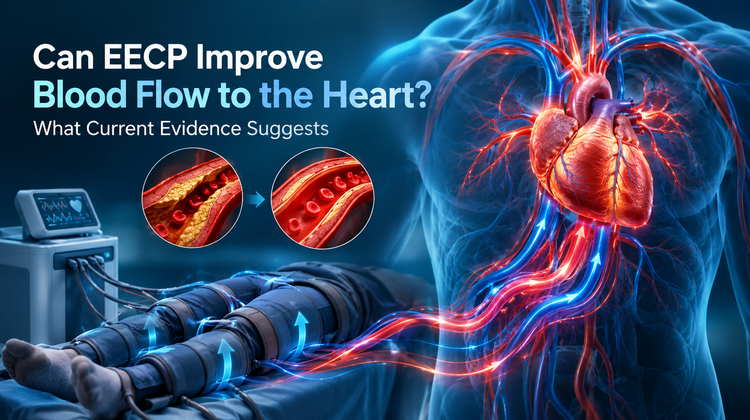
Enhanced External Counter Pulsation (EECP) is a non-invasive therapy designed to improve blood circulation to the heart without surgery.
During treatment:
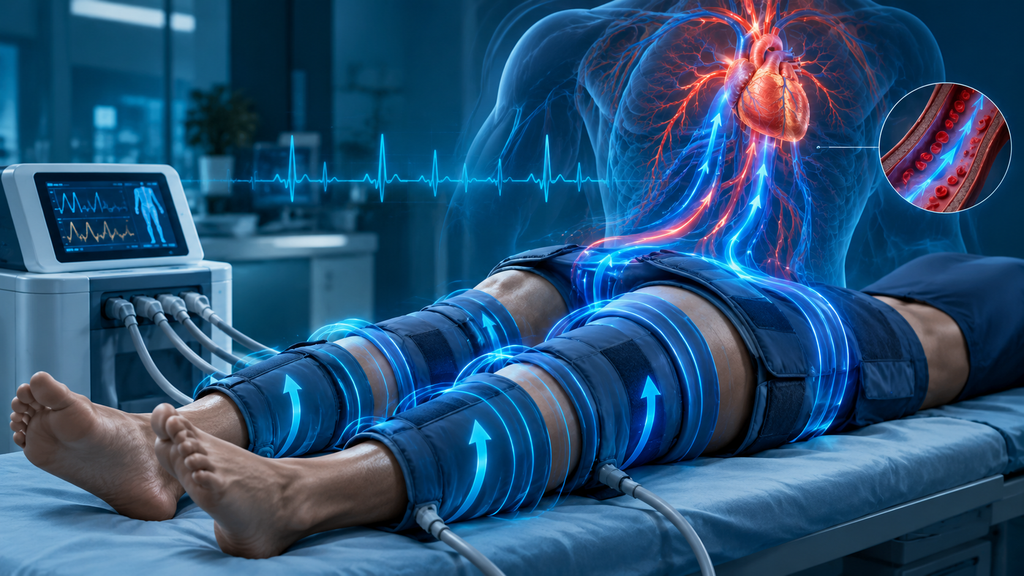
- Large inflatable cuffs are wrapped around the calves, thighs, and buttocks.
- A computerized system synchronizes the inflation and deflation of these cuffs with your heartbeat.
- The cuffs inflate during the heart’s relaxation phase (diastole).
- They rapidly deflate just before the heart contracts (systole).
This precise timing improves blood flow back toward the heart while reducing the effort required for the heart to pump blood to the rest of the body.
Unlike angioplasty or bypass surgery, EECP does not involve:
- Surgical incisions
- Catheters
- General anesthesia
- Hospital admission
- Implanting stents
How Does EECP Improve Blood Flow to the Heart?
EECP works by improving the heart’s circulation through several physiological mechanisms that have been studied in cardiovascular medicine.
1. It Increases Blood Supply During the Heart’s Resting Phase
The coronary arteries receive most of their blood supply during diastole, when the heart relaxes.
By inflating the cuffs during this phase, EECP increases blood returning toward the heart, creating higher pressure within the coronary circulation. This helps deliver more oxygen-rich blood to heart muscle tissue.
2. It Encourages the Development of Natural Bypass Blood Vessels
One of the most important long-term effects associated with EECP is the stimulation of collateral circulation.
Collateral vessels are small natural blood vessels that can gradually enlarge and create alternative pathways around narrowed coronary arteries.
Think of them as side roads that help traffic move when the main highway becomes congested.
Although these vessels do not replace severely blocked arteries, they may improve circulation enough to reduce symptoms and improve physical activity in suitable patients.
3. It Improves Blood Vessel Function
Healthy arteries naturally expand and contract to regulate blood flow.
The inner lining of blood vessels, called the endothelium, plays a critical role in this process.
Research suggests EECP may improve endothelial function by increasing the production of nitric oxide, a molecule that helps blood vessels relax and improves overall vascular health.
Better endothelial function means better circulation throughout the cardiovascular system.
4. It Reduces the Heart’s Workload
Because blood returns to the heart more efficiently, the heart pumps with less effort.
This reduction in cardiac workload may help relieve angina symptoms while improving exercise tolerance.
What Does Scientific Research Say About EECP?
EECP has been evaluated in:
- Randomized clinical trials
- Observational studies
- Long-term patient registries
- International cardiology guidelines
Current evidence suggests that appropriately selected patients may experience:
- Reduced frequency of chest pain
- Improved exercise capacity
- Increased walking distance
- Better tolerance for daily activities
- Improved quality of life
- Reduced use of certain anti-anginal medications in some individuals
Several professional cardiology societies recognize EECP as a reasonable treatment option for patients with refractory angina—persistent chest pain despite optimal medical therapy when additional angioplasty or bypass surgery is not appropriate.
Importantly, researchers consistently emphasize that EECP works alongside evidence-based medical treatment, not instead of it.
What EECP Does Not Do
Understanding the limitations of EECP is essential.
EECP does not:
- Remove plaque from arteries.
- Dissolve cholesterol deposits.
- Eliminate coronary artery disease.
- Replace emergency angioplasty.
- Replace bypass surgery when surgery is clearly indicated.
- Cure heart disease permanently.
Instead, EECP helps improve circulation and relieve symptoms in selected patients with chronic stable coronary artery disease.
Who Is Most Likely to Benefit From EECP?
Cardiologists may recommend EECP for patients who have:
- Chronic stable angina.
- Persistent chest pain despite medications.
- Symptoms that continue after angioplasty or bypass surgery.
- Coronary artery disease unsuitable for additional invasive procedures.
- Reduced exercise tolerance caused by chronic coronary artery disease.
- Selected cases of heart failure after specialist evaluation.
Each patient undergoes a detailed cardiac assessment before treatment is recommended.
Who Should Not Undergo EECP?
Although EECP is generally well tolerated, it is not suitable for everyone.
Patients may not be appropriate candidates if they have:
- Acute heart attack requiring emergency treatment.
- Unstable angina.
- Severe aortic valve disease.
- Active deep vein thrombosis.
- Severe peripheral artery disease.
- Uncontrolled hypertension.
- Significant bleeding disorders.
- Certain uncontrolled heart rhythm abnormalities.
Patient safety always comes first.
How Doctors Decide Whether EECP Is Right for You
Before recommending EECP, cardiologists evaluate several aspects of heart health.
These include:
Symptoms
Doctors assess:
- Frequency of chest pain.
- Breathlessness.
- Physical limitations.
- Response to medications.
Diagnostic Tests
Common investigations include:
- Electrocardiogram (ECG)
- Echocardiogram
- Stress test
- Coronary angiogram
- CT coronary angiography when appropriate
Heart Function
Your cardiologist evaluates:
- Pumping ability of the heart.
- Extent of coronary artery disease.
- Previous heart attacks.
- Previous angioplasty or bypass surgery.
Overall Health
Other medical conditions such as diabetes, kidney disease, peripheral vascular disease, and blood pressure also influence treatment decisions.
What Can Patients Realistically Expect?
One of the most important conversations between patients and cardiologists involves setting realistic expectations.
The goal of EECP is not to create a “new heart.”
Instead, treatment aims to help patients:
- Walk farther without chest discomfort.
- Climb stairs more comfortably.
- Reduce angina episodes.
- Improve exercise tolerance.
- Return to daily activities with greater confidence.
- Improve overall quality of life.
Individual results vary depending on the severity of coronary artery disease and other medical conditions.
Why Symptom Relief Matters as Much as Test Results
Modern cardiology is increasingly focused on outcomes that matter to patients—not just imaging reports.
For many people living with chronic coronary artery disease, success means:
- Spending more time with family.
- Returning to work.
- Sleeping without chest discomfort.
- Walking independently.
- Traveling comfortably.
- Participating in social activities again.

Lifestyle Remains the Most Powerful Long-Term Treatment
Even after successful EECP therapy, maintaining heart health depends on daily choices.
Doctors continue recommending:
- A Mediterranean-style or heart-healthy diet.
- Regular physical activity approved by your cardiologist.
- Smoking cessation.
- Diabetes management.
- Blood pressure control.
- Cholesterol reduction.
- Healthy body weight.
- Adequate sleep.
- Stress management.
- Regular follow-up appointments
These habits help protect both existing coronary arteries and newly developed collateral circulation.
Frequently Asked Questions
Does EECP physically open blocked arteries?
No. EECP does not remove plaque or widen blocked arteries. Instead, it improves circulation by increasing blood flow and encouraging the development of natural collateral blood vessels.
How long does an EECP treatment course usually last?
A standard treatment plan typically includes around 35 one-hour sessions, usually completed over seven weeks. Your cardiologist may adjust the schedule based on your condition.
Can EECP replace angioplasty or bypass surgery?
No. EECP is not a substitute when emergency angioplasty or bypass surgery is medically necessary. It is an additional treatment option for selected patients with chronic stable symptoms.
Is EECP supported by medical evidence?
Yes. Clinical research suggests EECP can improve symptom control, exercise tolerance, and quality of life in carefully selected patients with chronic stable angina. It is recognized by several professional cardiology guidelines as an option for specific patient groups.
Can EECP Improve Blood Flow to the Heart? What Current Evidence Suggests is best answered with a balanced understanding of the available scientific evidence. EECP has demonstrated the ability to improve coronary blood flow, encourage the development of natural collateral circulation, enhance blood vessel function, and reduce angina symptoms in carefully selected patients with chronic stable coronary artery disease. These benefits can translate into better exercise capacity, greater independence, and an improved quality of life.
At the same time, EECP is not a cure for coronary artery disease and should never be viewed as a replacement for medications, emergency angioplasty, or bypass surgery when those treatments are clinically indicated. The strongest outcomes come from a personalized treatment strategy that combines accurate diagnosis, evidence-based medical care, healthy lifestyle habits, and regular follow-up with a cardiologist. For patients who continue to experience chronic symptoms despite standard therapy, EECP may become an important part of a comprehensive heart care plan that focuses not only on improving blood flow but also on helping people live healthier, more active lives