
Why Does Chest Pain Return Even After a Normal ECG?
A normal ECG can be reassuring—but it does not always rule out heart disease. Many people visit a hospital with chest pain, undergo an Electrocardiogram (ECG), are told the results look normal, and assume their heart is healthy. Then, days or weeks later, the chest pain returns, leaving them confused and anxious.
The truth is that an ECG is an important diagnostic tool, but it is only one piece of the puzzle. Some heart conditions may not appear on an ECG, especially if symptoms are not occurring during the test or if the disease is in its early stages. In addition, chest pain can originate from several medical conditions beyond the heart.
If you are wondering, Why Does Chest Pain Return Even After a Normal ECG?, the answer lies in understanding what an ECG can detect, what it cannot, and why a complete cardiac evaluation is often necessary.
What Is an ECG and What Does It Show?
An Electrocardiogram (ECG) records the electrical activity of the heart.
It helps doctors evaluate:
- Heart rhythm
- Heart rate
- Signs of an ongoing heart attack
- Previous heart damage
- Certain electrical abnormalities
- Some structural heart conditions
Because it is quick, painless, and widely available, the ECG is often the first investigation performed when someone reports chest pain.
However, an ECG provides information about the heart only during the few seconds it records electrical activity.
A Normal ECG Does Not Always Mean a Normal Heart
One of the biggest misconceptions is believing that a normal ECG completely excludes heart disease.
In reality, a person may have:
- Early coronary artery disease
- Stable angina
- Small coronary artery blockages
- Microvascular disease
- Intermittent heart rhythm disorders
and still have a normal ECG between episodes of chest pain.
This is why cardiologists never rely on the ECG alone when evaluating persistent or recurring symptoms.

Why Chest Pain Can Return After a Normal ECG
1. Coronary Artery Disease May Not Show on a Resting ECG
The most common reason is that coronary artery disease does not always produce ECG abnormalities while a person is resting.
If the heart receives enough blood at rest but struggles during physical activity, the ECG may appear completely normal until the heart is placed under stress.
This is why additional tests are often recommended when symptoms continue.
2. The ECG Was Performed After Symptoms Had Settled
Timing matters.
If chest pain occurred earlier but resolved before the ECG was recorded, temporary changes may no longer be visible.
The heart’s electrical activity can return to normal even though the underlying condition still exists.
3. The Problem May Be in the Small Blood Vessels
Not every circulation problem involves major coronary arteries.
Some patients develop coronary microvascular dysfunction, where tiny blood vessels supplying the heart do not function properly.
These small vessels cannot always be evaluated using routine ECG testing, yet they may still cause:
- Chest discomfort
- Breathlessness
- Fatigue during activity
Microvascular disease is more common in:
- People with diabetes
- Women
- Individuals with high blood pressure
- Older adults
4. Coronary Artery Spasm Can Be Intermittent
Some people experience temporary tightening of the coronary arteries.
This condition, known as coronary artery spasm, temporarily reduces blood flow to the heart.
This condition, known as coronary artery spasm, temporarily reduces blood flow to the heart.
If the artery relaxes before the ECG is performed, the tracing may appear normal despite significant symptoms.
5. The Chest Pain May Not Be Cardiac
Chest pain is not always caused by heart disease.
Other possible causes include:
- Acid reflux (GERD)
- Muscle strain
- Costochondritis (inflammation of the chest wall)
- Lung infections
- Anxiety or panic attacks
- Gallbladder disease
- Gastric ulcers
Although these conditions are common, doctors must first rule out potentially serious heart problems before considering non-cardiac causes.
What Symptoms Suggest the Heart Could Still Be Involved?
Even with a normal ECG, chest pain deserves further evaluation if it is associated with:
- Pain during physical activity
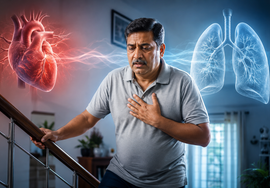
- Chest pressure or tightness
- Pain spreading to the jaw, neck, shoulder, or arm
- Shortness of breath
- Excessive sweating
- Nausea
- Unexplained fatigue
- Dizziness
- Family history of early heart disease
These symptoms increase the likelihood that the heart requires additional investigation.

Who Should Be Especially Careful?
Some people have a higher likelihood of heart disease despite a normal ECG.
Higher-risk individuals include those with:
- Diabetes
- High blood pressure
- High cholesterol
- Smoking history
- Obesity
- Kidney disease
- Family history of coronary artery disease
- Previous heart attack
- Existing coronary artery disease
In these patients, persistent chest pain should never be dismissed solely because the ECG appears normal.
What Tests May Be Needed After a Normal ECG?
When symptoms continue, cardiologists often recommend additional investigations.
Blood Tests
Cardiac biomarkers help determine whether heart muscle damage has occurred.
Echocardiogram
An ultrasound examination that evaluates:
- Heart pumping function
- Heart valves
- Heart muscle movement
- Structural abnormalities
Stress Test
A stress test evaluates how the heart performs during exercise or medication-induced stress.
It can reveal reduced blood flow that is not visible on a resting ECG.
CT Coronary Angiography
This non-invasive scan provides detailed images of the coronary arteries and can identify plaque buildup.
Coronary Angiogram
When significant coronary artery disease is suspected, coronary angiography remains one of the most accurate methods for evaluating arterial blockages.
The choice of investigation depends on the patient’s symptoms, medical history, and overall cardiovascular risk.
Can Anxiety Cause Chest Pain With a Normal ECG?
Yes.
Anxiety and panic attacks can produce symptoms remarkably similar to heart disease, including:
- Chest tightness
- Rapid heartbeat
- Shortness of breath
- Sweating
- Dizziness
However, anxiety should never be assumed to be the cause until heart disease has been appropriately excluded by a healthcare professional.
When Should You Seek Emergency Medical Care?
Call emergency medical services immediately if chest pain:
- Lasts longer than a few minutes
- Occurs with severe breathlessness
- Spreads to the jaw, shoulder, back, or arm
- Is accompanied by heavy sweating
- Causes fainting
- Occurs suddenly at rest
- Becomes progressively worse
A normal ECG from an earlier visit should never delay emergency evaluation if new or worsening symptoms develop.

Where Does EECP Fit Into This Situation?
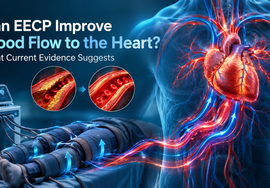
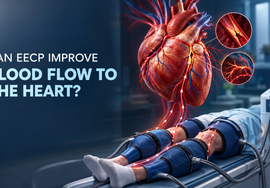
If further evaluation confirms chronic stable coronary artery disease, and chest pain continues despite medications or previous procedures, your cardiologist may discuss Enhanced External Counter Pulsation (EECP) as part of a long-term treatment plan.
EECP is a non-invasive therapy that improves blood circulation by using inflatable cuffs placed around the legs. These cuffs inflate and deflate in rhythm with the heartbeat, helping increase blood flow to the heart and encouraging the development of natural collateral blood vessels.
It is important to understand that EECP is not a diagnostic test and is not used for emergency chest pain. It is considered only after a complete cardiac evaluation has identified appropriate candidates with chronic, stable symptoms.
Think Beyond the Test—Focus on the Pattern
One ECG captures only a brief moment in time, but heart disease often develops over months or years. That is why experienced cardiologists look beyond a single test and focus on the pattern of your symptoms.
They ask questions such as:
- Does the pain occur during exertion?
- Has it become more frequent?
- Does it improve with rest?
- Are there associated symptoms like breathlessness or sweating?
- Do you have diabetes or high cholesterol?
- Is there a family history of heart disease?
These answers often provide clues that are just as valuable as the ECG itself.